
Zoodoku: Brain Puzzle Games
Nebula StudioPuzzle
4.61.94K Reviews
- Version
- 1.2.7
- Installs
- 1.00M
- Age Rating
- Everyone
Screenshots
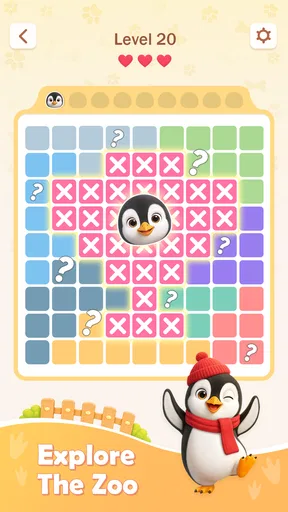

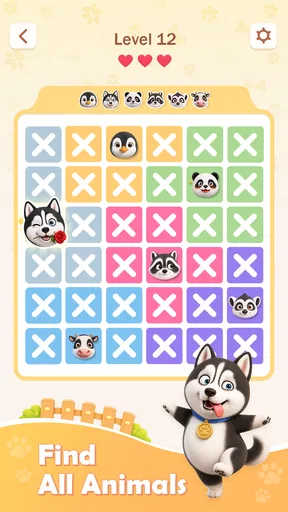

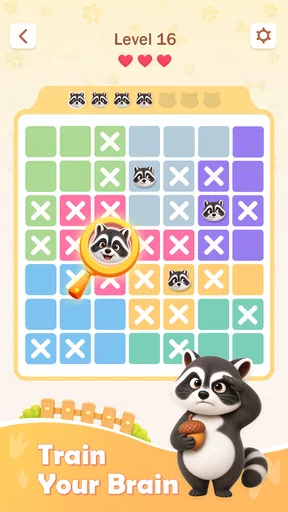
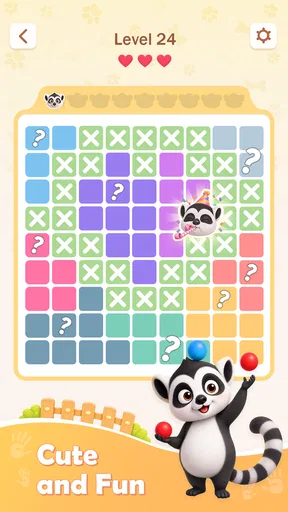
Our Review of Zoodoku: Brain Puzzle Games
 Analysis by Appyee
I like puzzle games that explain themselves quickly. When I have a few spare minutes, I do not want a long tutorial, a complicated menu, or a story that makes me commit to a full session before the fun begins. That is where Zoodoku makes a good first impression. It is a free animal-themed logic game from Nebula Studio, built around the familiar Sudoku idea but presented with a lighter, friendlier personality. The animal focus gives the board a softer feel than a traditional number puzzle, while the underlying appeal remains the same: look for patterns, make a careful choice, and enjoy the small satisfaction of completing a clean solution.
After spending time with it, I see this as a game for short, low-pressure brain breaks rather than an all-purpose puzzle collection. It is especially comfortable when I want something I can start immediately and put down without feeling that I have abandoned a larger adventure. The store summary points toward animal logic puzzles, cat puzzles, and daily brain games, and that combination gives the game a clear identity. It is not trying to replace every Sudoku app or become a deep strategy title. Its strength is the pleasant space between a classic logic exercise and a casual mobile pastime.
How Zoodoku feels in a short session
The central pleasure is easy to understand: I scan the grid, compare the available possibilities, and gradually turn uncertainty into certainty. That basic loop is familiar, but the animal presentation helps it feel less formal. Someone who finds standard Sudoku a little dry may be more willing to return when the board has a playful visual theme. The game’s Everyone content rating also makes it suitable for a broad audience, including families looking for a quiet puzzle rather than an action-heavy game.
What matters most here is the speed of entry. A good short-session puzzle should let me move from opening the game to thinking about the board with very little friction. Zoodoku fits that expectation well in spirit. I can approach it as a quick mental reset: solve a few placements, reassess the grid, and decide whether I want to continue. That rhythm is more important to me than a dramatic presentation. The game earns its place on a phone by making the puzzle itself the main event.
There is also a useful difference between “quick to start” and “quick to finish.” Zoodoku can give me an immediate foothold without making every session trivial. The first logical move may be obvious, but the later stages ask me to hold several possibilities in mind. That gradual increase in attention is what keeps the experience from feeling like a simple matching toy. I get a small reward from every correct placement, but I still need to think rather than tap through a sequence of obvious answers.
For a realistic everyday example, I would use it while waiting for an appointment or during a short break between tasks. I can begin without preparing a long setup, play until my attention is called elsewhere, and leave with the feeling that I used the time actively. It also suits a quiet evening when I want stimulation without the pressure of a competitive game. The best sessions are the ones where the puzzle occupies my mind just enough to block out distractions, but not so much that I feel trapped by it.
The visual theme helps, but the logic still has to carry the game
The animal angle is more than a label because it changes the emotional temperature of the experience. Numbers and grids can feel academic, especially for players who associate Sudoku with newspapers or formal brain-training exercises. Animal imagery makes the same kind of reasoning feel more approachable. That is a smart choice for casual players, younger users, and anyone who wants a puzzle that feels warm rather than severe.
Still, a theme cannot solve a weak puzzle. If the logic becomes repetitive or the board design stops offering meaningful decisions, the animals would only decorate the problem. In my view, Zoodoku works best when the presentation gets out of the way and lets the deduction provide the satisfaction. The theme invites me in; the logic determines whether I stay.
A practical tip is to avoid treating every move as a guess. I get more from the game when I first look for the row, column, or area with the fewest realistic choices. That approach reduces careless taps and makes the solution feel earned. On an easier board, it also prevents the experience from becoming a mindless search for whatever space looks available. The animal styling may make the game casual, but the most enjoyable way to play is still methodical.
A rhythm that suits interruptions
Short-session clarity is one of the game’s strongest qualities. I do not need to reserve a large block of time to appreciate it. A few minutes can contain a meaningful piece of progress, and a longer session can develop naturally if the puzzle holds my attention. That flexibility is valuable on mobile because phone use is often fragmented. I may have time for one focused attempt, then need to switch to a message, a conversation, or another task.
This interruption-friendly quality also changes how I judge mistakes. In a longer game, losing progress can feel expensive. In a compact logic puzzle, a mistake is usually a prompt to slow down and review the board. I find that less frustrating than losing a character, missing a timed event, or failing a level after a long sequence of actions. The consequence is mental rather than dramatic, so I can return without a heavy emotional reset.
That does not mean every player will find the pace ideal. People who want constant novelty may feel that the game asks them to repeat the same type of concentration. There are no action controls or rapidly changing situations to refresh the mood. The appeal depends on whether you enjoy the quiet process of narrowing possibilities. If you need a new mechanic every few minutes, this will probably feel restrained.
Putting the game down and coming back
One of the most useful qualities in a casual puzzle is the ability to stop without regret. I prefer games that respect an interrupted day, and Zoodoku is naturally suited to that pattern because its core activity is self-contained. I can think through a section of the board, pause my attention when necessary, and return later to continue the same kind of reasoning. That makes it a better companion for waiting rooms, public transport, or a lunch break than games that rely on uninterrupted momentum.
When I return after a distraction, I use a simple reset: I reread the row and column around my last move instead of immediately tapping again. That takes only a moment, but it helps me recover the logic I was following. It is also a good way to catch a mistaken assumption before it spreads across the rest of the board. This small habit makes the game feel more manageable during fragmented play and gives each return a clear starting point.
The trade-off is that a puzzle can lose some of its mental context if I leave it for too long. A board that felt obvious before a break may require a fresh scan afterward. I do not consider that a serious flaw; it is part of solving logic puzzles. In fact, the pause can be useful. Returning with fresh eyes sometimes reveals a placement I overlooked when I was staring at the same pattern too intensely.
I would be cautious about choosing it as a background game while watching a film or listening closely to a conversation. The board may be quiet, but solving still needs attention. It is interruption-tolerant, not attention-free. That distinction matters: Zoodoku works when the interruption is occasional, but it is less satisfying if I am constantly dividing my focus and making random moves.
Replay value comes from reasoning, not spectacle
The replay value is tied to how much I enjoy solving another logic board after finishing one. This is a different kind of replay from a game with branching stories, collectible characters, or changing environments. The reward is the act of deduction itself. I return because I like the clean mental process, not because I am waiting for a cinematic reveal.
The animal and cat focus gives the game a more inviting reason to revisit, especially for players who want their puzzle hobby to feel cheerful. The daily brain-game framing also supports a routine: opening the game as part of a morning break, an evening wind-down, or a regular moment away from social feeds. I would not describe that as a substitute for a full daily planner or habit system, but it can become a pleasant recurring activity if the format matches my taste.
There is a limit to this appeal. Once I have played enough boards, the basic structure can feel familiar. Players who already spend a lot of time with conventional Sudoku may notice the repetition more quickly than newcomers. For them, a dedicated Sudoku app with a wider range of difficulty controls or more specialized solving tools may be a better long-term choice. Zoodoku is more convincing as an approachable animal puzzle than as a comprehensive destination for expert Sudoku enthusiasts.
My advice is to vary the way you approach each board rather than rushing for completion. On one attempt, focus on the most constrained spaces. On another, inspect the relationship between a nearly completed row and its surrounding columns. This does not change the game’s rules, but it keeps the mental activity from becoming automatic. I also find it more satisfying to pause after a mistake and identify why the move was wrong instead of immediately trying another symbol. That turns a failed placement into useful practice.
Who will enjoy it, and who should choose something else
Zoodoku is a strong fit for casual puzzle players, animal lovers, families, and anyone who wants a free game that can occupy a short break without demanding a large commitment. Its broad age rating makes it approachable, and its 500K-plus installs show that it has already attracted a substantial audience. The average rating of 4.5 from around 10K ratings suggests that many players find the overall experience appealing, although a rating alone cannot tell me whether it will match every player’s preferred difficulty or presentation.
I would recommend it to a friend who says, “I want something relaxing, but I still want to use my brain.” It is also a sensible choice for someone moving from paper Sudoku to mobile play and looking for a less austere atmosphere. The free price removes the usual barrier to trying it, so there is little reason not to test the basic rhythm personally if animal-themed logic puzzles sound appealing.
I would steer a different friend toward another type of game if they want fast reactions, social competition, a strong narrative, or constant audiovisual change. Zoodoku is not the right answer for someone who becomes bored when a game’s main mechanic stays consistent. It may also disappoint advanced Sudoku players who expect a large toolbox for detailed analysis rather than a friendly, casual presentation.
The developer, Nebula Studio, has positioned the game clearly enough that I do not have to guess what kind of experience I am opening. It is a puzzle game first, with animals providing the personality. That clarity is valuable because it prevents the common mismatch where a colorful casual game turns out to require long, demanding sessions. Here, the central promise is easier to understand: open it, examine the logic, and enjoy a compact challenge.
Practical details before installing
The game is free, and it carries an Everyone content rating, which makes it a low-risk option for a shared family device or for someone who prefers gentle entertainment. It runs on Android 7.1 or later, so owners of older compatible phones may still be able to use it without needing a recent operating system. The current version is 1.0.8, a detail worth checking against the software version available on the device before installing.
The release date is Jun 25, 2026, so I would approach it as a relatively new entry rather than a long-established puzzle institution. That can be positive if I enjoy discovering a fresh take on a familiar format, but it also means I would judge it primarily by the experience available now instead of assuming it has the depth accumulated by older specialist Sudoku apps. The important question is whether the current presentation and puzzle loop already give me enough reason to return.
Before choosing it, I would ask myself three simple questions. Do I enjoy Sudoku-style deduction? Do I like animal-themed presentation? And do I want a game that works best in small, flexible sessions? If the answer to all three is yes, Zoodoku makes sense. If I answer no to the first question, the theme will not be enough to carry the experience. If I want advanced statistical tracking, intense competition, or a large variety of unrelated puzzles, I would look elsewhere.
My casual verdict on Zoodoku
Zoodoku is at its best as a cheerful, interruption-friendly logic break. I appreciate that it does not need a dramatic premise to be useful. It gives me a familiar puzzle structure, softens the presentation with animals, and lets me decide whether a session lasts a few minutes or longer. The immediate pleasure comes from finding a clean move; the lasting appeal depends on whether I enjoy repeating that process across more boards.
Its main limitation is also easy to understand: the experience is focused. Players looking for action, story, social features, or a constantly changing set of mechanics should not install it expecting those things. Even experienced Sudoku fans may eventually want a more specialized alternative. But for a free puzzle game aimed at approachable animal logic, that narrow focus is mostly a strength rather than a weakness.
I would recommend giving it a try when you want a calm mobile activity that starts quickly, survives ordinary interruptions, and rewards attention without making a short break feel like a commitment. Keep your moves deliberate, use pauses to reassess instead of guessing, and judge the replay value by how much you enjoy the solving itself. For the right player, this is a pleasant way to turn idle minutes into a small, satisfying mental workout.
Privacy and Permissions
See what permissions an app requests and how it handles your data.
- Wi-Fi connection information
- view Wi-Fi connections
- Other
- view network connections, full network access, control vibration, prevent device from sleeping, Google Play license check
Verdict
Strengths of Zoodoku: Brain Puzzle Games
- Simple rules make it easy to start playing immediately.
- Short rounds are ideal for quick breaks or casual sessions.
- Combines Sudoku logic with animal-themed visuals for variety.
- Gradually challenging puzzles can help maintain interest.
- Offline play makes it convenient when no internet is available.
Limitations of Zoodoku: Brain Puzzle Games
- Some levels may feel repetitive after extended play sessions.
- Hints or extra features may be limited without watching advertisements.
- The cute presentation may not appeal to traditional Sudoku fans.
- Difficulty progression can feel uneven between certain puzzles.
- Frequent ads may interrupt the flow of gameplay.
Other Releases by Nebula Studio
View All


Similar Picks in This Category
View All
Block Blast!
HungryStudio4.8

Braindom: Brain Games Test
Lahana Game Studio4.6

AMAZE!
CrazyLabs LTD4.6

Sudoku - Classic Sudoku Puzzle
Oakever Games4.7

Art Puzzle - Puzzle Games
Easybrain4.8

Amaze GO!
Oakever Games4.9
Frequently Asked Questions
What is Zoodoku and how is it different from traditional Sudoku?
Zoodoku is a Sudoku-style puzzle game that combines classic number-placement rules with a colorful animal-themed presentation. Instead of feeling like a plain logic grid, the game uses visual characters and a more playful interface to make solving puzzles approachable for casual players. The core objective remains the same: fill each row, column, and section without repeating numbers or symbols, depending on the selected puzzle format.
Is Zoodoku suitable for beginners, or is it designed only for experienced Sudoku players?
Zoodoku is generally suitable for both beginners and experienced puzzle fans. New players can start with easier boards to learn the rules and understand the game’s visual layout, while more advanced users can move toward challenging puzzles that require careful deduction. It is helpful to begin slowly, since guessing can create mistakes later in the grid. The difficulty progression makes the game accessible without removing the challenge.
Can I play Zoodoku offline without an internet connection?
Many of Zoodoku’s basic puzzle features can typically be enjoyed without a constant internet connection, which makes it convenient for travel, commuting, or short breaks away from Wi-Fi. However, some functions may depend on connectivity, including advertisements, online events, cloud-related services, updates, or promotional content. Before relying on offline play, it is recommended to open the game once while connected and check which features remain available after switching to airplane mode.
Does Zoodoku contain advertisements or optional in-app purchases?
Zoodoku may include advertising and optional purchases, as is common with free-to-download mobile puzzle games. Advertisements can appear between puzzles or during certain parts of the experience, while purchases may be offered to remove ads, unlock additional content, or provide helpful features. The exact options can vary by platform and version. Users should review the store listing and payment settings before downloading, especially when the device is shared with children.
What permissions and device requirements should I check before downloading Zoodoku?
Before installing Zoodoku, check that your Android or iOS device meets the current operating-system requirements shown on the official app store page. Puzzle games usually need modest storage and hardware resources, but available space is still important for installation and updates. Also review the permissions requested by the app and confirm that they seem appropriate for a puzzle game. Keeping the operating system and the application updated can improve stability and compatibility.
Play our best games!


